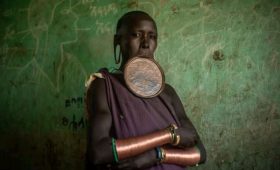
In the remote and captivating landscapes of Ethiopia’s Omo Valley, the women of the Mursi tribe are known for one of the most striking cultural expressions in Africa — the lip plate. Often misunderstood by outsiders, this powerful tradition carries layers of meaning that go far beyond what many visitors first imagine.
A Common Story: Protection from Slave Traders
One of the most widely shared explanations connects the lip plate tradition to the era of the East African slave trade. According to this narrative, women began modifying their lips to make themselves appear less desirable to slave traders who once passed through or near the region.
This story is compelling and it is frequently repeated in travel discussions, documentaries, and even by some local voices. It reflects a painful chapter in African history and offers a powerful interpretation of resistance and survival. For many travelers, this explanation creates an emotional connection, but it is not the full story.
What Research Suggests
Anthropologists and historians present a more nuanced perspective. There is no clear historical evidence proving that the lip plate tradition originated as a response to slavery. In fact, many researchers believe this explanation may have been introduced or popularized during colonial times, when outsiders attempted to interpret African cultural practices through their own lens.
Rather than being a direct result of the slave trade, the lip plate is better understood as an indigenous cultural tradition — one that developed naturally within the Mursi community over generations.
The True Meaning Within Mursi Culture
For the Mursi tribe, the lip plate is deeply rooted in identity and social values:
- It marks a young woman’s transition into adulthood
- It represents beauty, strength, and resilience
- It reflects cultural pride and a strong sense of belonging
- It plays an important role in marriage traditions and social status
The process itself requires endurance, patience, and commitment. It is not simply about appearance — it is a personal and cultural journey. Each plate tells a story of maturity, identity, and continuity in a community that values tradition deeply.
Beyond the Myth
While the connection to the slave trade remains a popular and widely shared story, it is important to approach it with care and awareness. The lip plate tradition is not just a reaction to history it is a living cultural expression, shaped by generations of meaning, pride, and identity.
For visitors exploring the Omo Valley, understanding this deeper context transforms the experience completely. What may first appear unusual becomes a powerful symbol of resilience and cultural richness. It invites travelers to look beyond first impressions and engage with the true spirit of the people.
Make Your Journey More Meaningful
At Omo Region Tours, we don’t just take you to see cultures — we help you understand them. Our experiences are designed to connect you with the real stories, the real people, and the deeper meanings behind traditions like the Mursi lip plate.
If you’re seeking an authentic journey into the heart of the Omo Valley, we invite you to travel with us and experience it for yourself.